
This post contains affiliate links. If you buy through them, I may earn a small commission at no extra cost to you.
If I could recommend just one thing for most families, it would be an indoor swing. It's the piece of equipment I suggest more than any other, and families tell me over and over that it changed their afternoons. Here's why.
Meet the vestibular system
Deep inside the inner ear is the vestibular system, your body's movement and balance sensor. It tells the brain which way is up, whether you're moving, how fast and in what direction.
It does far more than keep us from falling over. The vestibular system is closely connected to:
- Balance and posture, which are the ability to sit upright, stand steady and move smoothly
- Eye control, keeping the eyes steady while the head moves, which matters for reading and catching a ball
- Muscle tone and coordination
- Arousal and regulation, how alert, calm or wound up we feel
Why movement matters for brain development
Babies and children seek movement for a reason. Rocking, swinging, spinning, rolling and hanging upside down all feed the vestibular system the input it needs to develop. Over time, that input helps the brain build steady balance, efficient eye movements and a well-regulated nervous system.
Many kids today simply don't get as much of it as they need. Less outdoor play, more sitting and fewer playgrounds add up.
Why swinging is so regulating
Different kinds of movement affect the nervous system differently:
- Slow, rhythmic, linear swinging (front to back, side to side) tends to be calming and organizing. It's why we rock babies to sleep.
- Fast, spinning or irregular movement tends to be alerting, and it's intense. A little goes a long way.
That's what makes a swing such a powerful tool at home: you can use it to help an over-revved child settle after school, or to wake up a sluggish body before homework, just by changing how it moves.
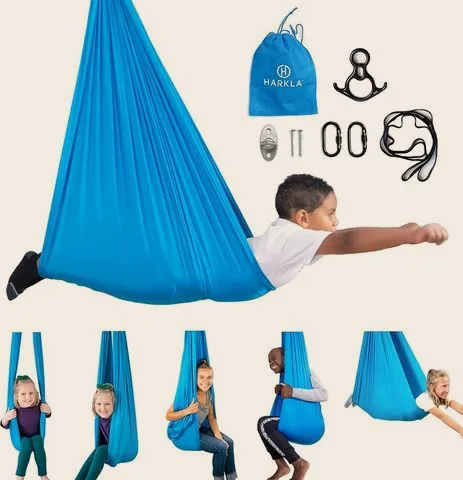
A stretchy lycra or compression swing adds another layer: gentle, hug-like pressure all around the body, which many kids find deeply calming.
Choosing an indoor swing
- Lycra or compression swings: my top pick for regulation. They're cozy, calming and easy to climb into.
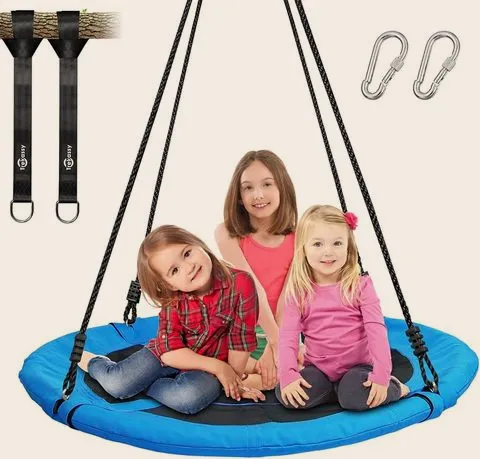
- Saucer swings: great for lying down, sitting or sharing, and for linear or gentle circular movement. They work indoors and out.
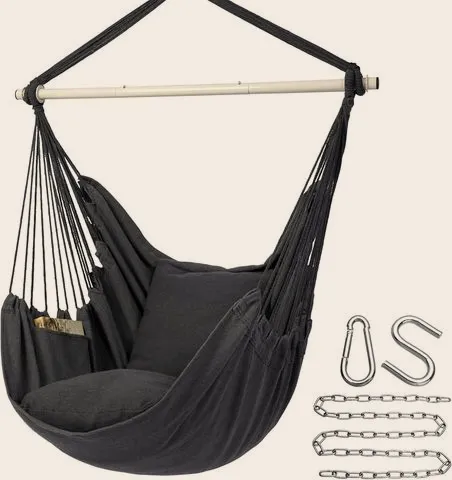
- Hammock and chair swings: a cozy spot to read and decompress, better for older kids.
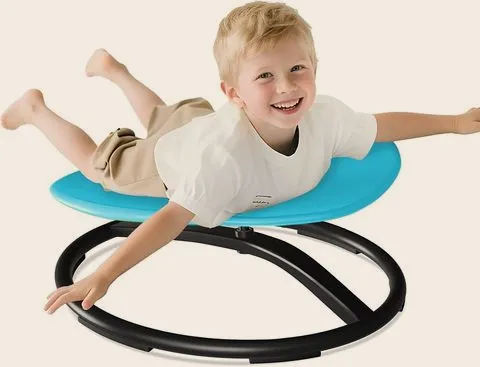
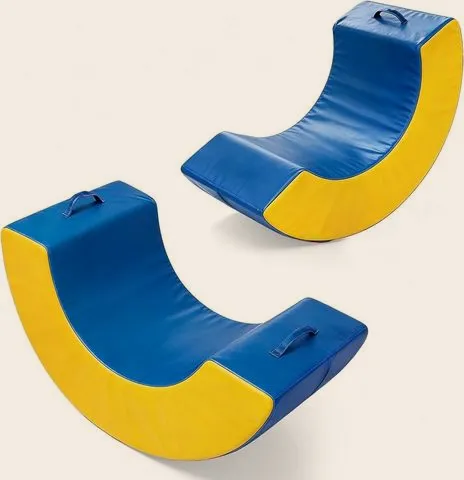
- Spinners and rockers: kids control their own movement, which is great for kids who crave spinning.
Setting it up safely
- Mount it right. Use a ceiling mount rated for dynamic loads, installed into a joist or beam, not drywall. A doorway bar or free-standing frame works if you can't mount into the ceiling. When in doubt, have a professional install it.
- Add a swivel if you want spinning, and put a crash pad or thick mat underneath.
- Follow the weight limits and always supervise.
How to use it
- Let your child lead. Kids are often good at knowing how much movement they need. Let them push off themselves when they can.
- Slow and steady for calming. Gentle linear swinging for a few minutes before homework, meals or bedtime.
- Go easy on spinning. Keep it short and child-directed, never forced.
- Watch for signs of too much. Stop if you notice paleness, sweating, nausea, yawning, or a sudden change in mood. The effects of vestibular input can show up a little while after the movement stops.
- Make it part of the routine. Ten minutes after school does more than an occasional long session.
When to talk to an OT
If your child seems to crave movement constantly, avoids swings and playgrounds, gets motion sick easily, or is very fearful when their feet leave the ground, it's worth a conversation with an occupational therapist. Those can all be signs that the vestibular system needs support. We'd love to help at NeuroNest.
Every child is different. This post is general education, not medical advice. If you have concerns about your child's development, talk with your pediatrician or an occupational therapist. In the Dallas area? Learn about evaluations at NeuroNest.