
This post contains affiliate links. If you buy through them, I may earn a small commission at no extra cost to you.
The first year is the fastest period of brain development in a child's life, and babies do almost all of that building through their senses and their bodies. You don't need flashcards or fancy programs. You need floor time, your face, your voice, and a few simple things to look at, reach for and move toward.
Here's how I think about supporting each sense in the first year.
Movement: the foundation
Babies learn to organize their bodies by moving: lifting their heads, pushing up, rolling, pivoting, crawling and eventually pulling to stand. Each stage builds the strength and control for the next, and movement is also how the early reflexes gradually integrate.
What helps most:
- Tummy time, early and often. Start with short, frequent sessions on your chest or across your lap, and build up. Many babies protest at first, and that's normal.
- Plenty of floor time. Babies move most when they're free on the floor. Time in bouncers, seats and swings is fine in small doses, but a baby who spends most awake time contained doesn't get as much practice.
- Change positions. Tummy, back, side-lying and supported sitting all ask different muscles to work.
- Carry and rock. Being carried, rocked and gently moved through space gives the balance system early input.
Vision: learning to look
Newborns see best at close range and are drawn to high contrast and faces. Over the first months, their eyes learn to focus, follow a moving object, and work together.
What helps:
- Your face is the best visual toy there is. Get close, make expressions, and move slowly side to side so they can follow.
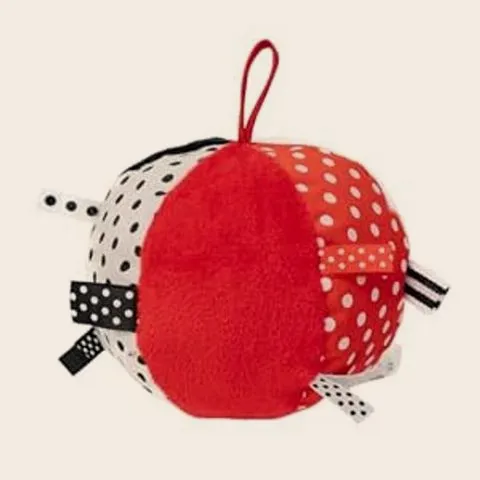
- High-contrast images in the early weeks, then bright, colorful toys as their vision matures.
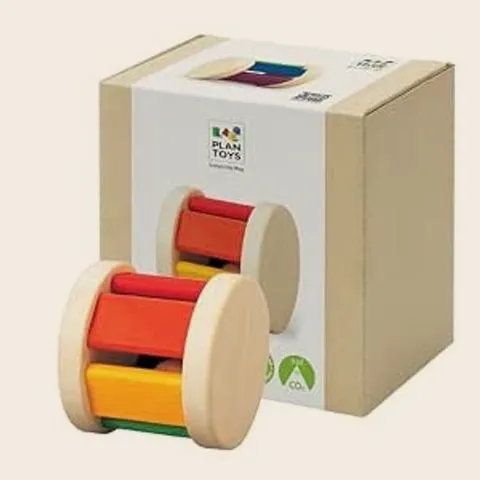
- Things that move slowly, like a rolling ball, a spinning toy or a mirror during tummy time.
Touch and hands: exploring the world
Touch is one of the most developed senses at birth. Babies explore with their hands and their mouths, and mouthing is a normal, important part of learning about objects.
What helps:
- Skin-to-skin and gentle massage in the early months
- Different textures to touch: soft, crinkly, smooth, bumpy
- Easy-to-grasp toys with loops and handles, so little hands can grab, shake and pass from hand to hand
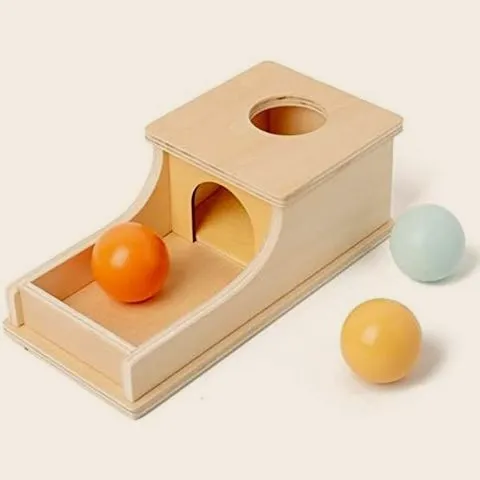
- Cause-and-effect toys later in the year: push, poke, drop and watch what happens
Sound: the rhythm of language
Talking, singing and reading to your baby builds the foundation for language and also for attention. Babies are wired to tune in to your voice.
- Narrate your day. It doesn't matter what you say. Babies need to hear lots of words.
- Sing and use rhythm. Songs with movement, like bouncing or clapping, combine sound and movement beautifully.
- Leave pauses. When your baby coos, wait and respond. That back-and-forth is the start of conversation.
Safety notes
- Nothing weighted for babies. Weighted blankets, sleep sacks and weighted toys are not recommended for infants.
- Follow safe sleep guidance: a flat, firm sleep surface with nothing else in the crib.
- Always supervise tummy time and play, and check every toy's age label and small-parts warnings.
When to check in
Every baby develops on their own timeline, but it's worth talking with your pediatrician, or asking about an OT evaluation, if your baby:
- Strongly prefers turning their head to one side, or you notice a flat spot developing
- Feels very stiff or very floppy, or arches their back a lot
- Rarely uses one hand, or keeps one hand fisted most of the time after the first few months
- Strongly and consistently resists tummy time, being moved, or being touched
- Isn't reaching the milestones your pediatrician checks at well visits
Early support makes a big difference, and a check-in is never an overreaction.
Every child is different. This post is general education, not medical advice. If you have concerns about your child's development, talk with your pediatrician or an occupational therapist. In the Dallas area? Learn about evaluations at NeuroNest.