

This post contains affiliate links. If you buy through them, I may earn a small commission at no extra cost to you.
"What should I put in our playroom?" is one of the questions I get asked most, by families in the clinic and on Instagram alike. My answer always starts in the same place: before we talk about stuff, let's talk about why.
Why sensory-motor play matters
Children build their brains from the body up. Every time a child climbs, swings, crashes, balances, crawls or squeezes, the brain receives a flood of information from the muscles and joints, the balance system in the inner ear, and the skin. The brain uses that information to build a map of the body and its place in space.
That map is the foundation for almost everything else we ask kids to do:
- Posture and attention. A child with a well-organized body can sit upright and focus. A child whose body feels disorganized often wiggles, slumps or leaves the chair because moving is how they get the input they need.
- Coordination and motor planning. Knowing where your body is makes it easier to learn new movements, from riding a bike to writing letters.
- Eye control. The balance system and the eyes are closely connected. Movement helps the eyes learn to stay steady and track smoothly.
- Regulation. This is the big one. The right kind of movement and pressure can help an over-revved child settle and a sluggish child wake up. Sensory-motor play is one of the most reliable regulation tools we have.
Today's kids spend far more time sitting than any generation before them. A playroom built for movement gives back some of what everyday life has taken away.
The three things every sensory playroom needs
You don't need a clinic. You need a place to do three things:
1. Move (vestibular input): swinging, rocking, spinning and balancing. 2. Push, pull and crash (proprioceptive input, or "heavy work"): climbing, crawling, jumping and crashing into something soft. 3. Retreat (a calm corner): somewhere cozy, dim and snug to reset.
Most kids lean toward one of these more than the others. Watch what your child does when they're dysregulated. Crashers need more of #2, movers need #1, and hiders need #3. Then build accordingly.
Start here: the small-space version
Even a corner of a bedroom or living room can work:
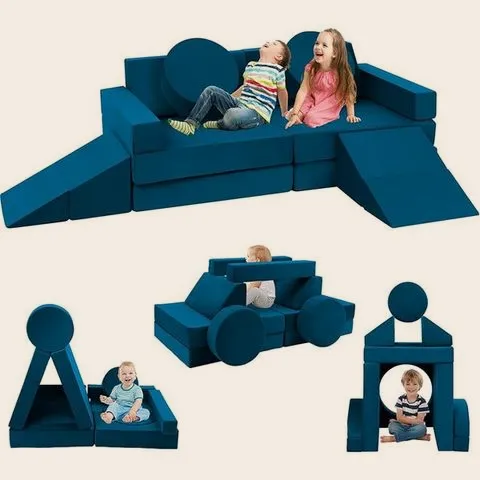
- Something to crash into or build with, like a play couch or a stack of floor cushions
- Something snug, like a compression tunnel or body sock
- One balance challenge, like stepping stones or a line of tape on the floor
- A calm spot with soft light and a weighted plush





Level up: the medium playroom
If you have a dedicated room or a large corner, the single most powerful addition is an indoor swing. Swinging gives the balance system rich, organizing input, and a stretchy lycra swing adds calming, hug-like pressure. It's the piece I recommend more than any other.
Add a climbing piece for heavy work and a crash pad to land on, and you've covered all three needs.



The full sensory room
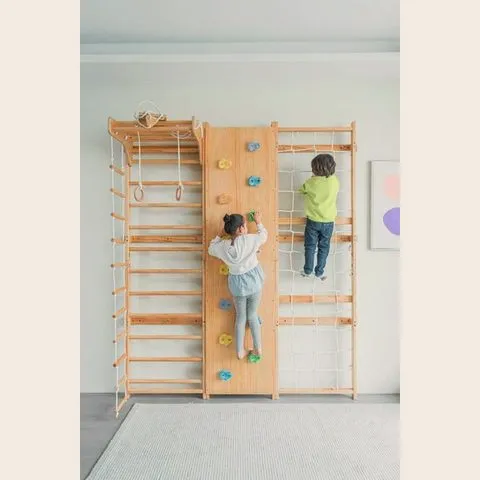
For families ready to invest, a wall climber turns a room into a full movement space, and flexible seating makes the room useful for homework and quiet play too.




Setting it up well
- Safety first. Ceiling swings need a rated mount installed into a joist or beam. Keep crash zones clear of furniture edges, put padding under climbers, and supervise.
- Less is more. A room with five good pieces gets used more than a room with twenty. Rotate toys in and out.
- Keep it calm visually. Neutral colors and closed storage help the space feel regulating rather than overwhelming.
- Use it before the hard parts of the day. Ten minutes of movement after school or before homework tends to do more than using the room only during meltdowns.
- Never use it as a punishment. It should always feel like a safe place to go.
When to ask for help
If your child seems to need movement constantly, avoids it completely, or has big reactions to sound, touch or movement that get in the way of daily life, that's worth a conversation with an occupational therapist. We can look at why their body is seeking or avoiding input and build a plan around it. In the Dallas area, that's exactly what we do at NeuroNest.
Every child is different. This post is general education, not medical advice. If you have concerns about your child's development, talk with your pediatrician or an occupational therapist. In the Dallas area? Learn about evaluations at NeuroNest.