
This post contains affiliate links. If you buy through them, I may earn a small commission at no extra cost to you.
If your child has been evaluated at NeuroNest, or you've followed along on Instagram for a while, you've probably heard me talk about primitive reflexes. It's one of the questions I get most: What are they, and what can I actually do at home?
Here's the parent-friendly version.
What are primitive reflexes?
Babies are born with a set of automatic movement patterns called primitive reflexes. You've seen some of them: the startle when a baby hears a loud noise (the Moro reflex), the tight grip when you put a finger in their palm, or the "fencer" pose when a baby turns their head to one side.
These reflexes have a job in early life. Then, as a baby rolls, crawls, pulls to stand and moves more and more on purpose, the brain builds more mature control and the reflexes gradually fade into the background. We call that integration.
What does "retained" mean?
Sometimes a reflex stays more active than we'd expect for a child's age. In the clinic, we look at reflexes alongside balance, coordination, sensory processing and motor skills, because together they help explain why a child might be struggling with things like sitting still, handwriting, coordination or regulation.
To be straightforward with you: research on retained reflexes is still developing, and a reflex on its own doesn't explain everything. That's why we assess the whole child rather than chase a single pattern, and why a checklist online can't tell you whether your child has a retained reflex.
Why movement is the foundation
Reflexes integrate naturally through movement: lots of tummy time, rolling, crawling, rocking, climbing and balancing in the early years. So even though a formal reflex program should be guided by a trained therapist, rich movement play at home supports the same foundation.
The good news is that it looks a lot like regular, joyful play.
Everyday play that supports the foundation
- Tummy time and floor play. For babies, and honestly for older kids too. Reading, drawing or building while lying on the tummy builds neck, shoulder and core strength.
- Rolling games. Log rolls down a soft mat or across the living room floor.
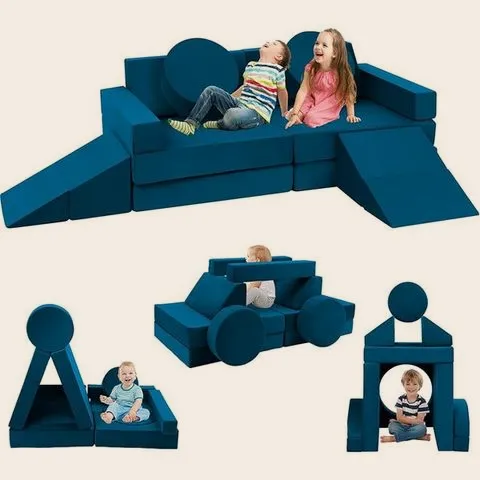
- Crawling, lots of it. Crawl through tunnels, under a blanket fort, or race bear-crawl style down the hallway. Crawling uses both sides of the body in a cross-pattern.
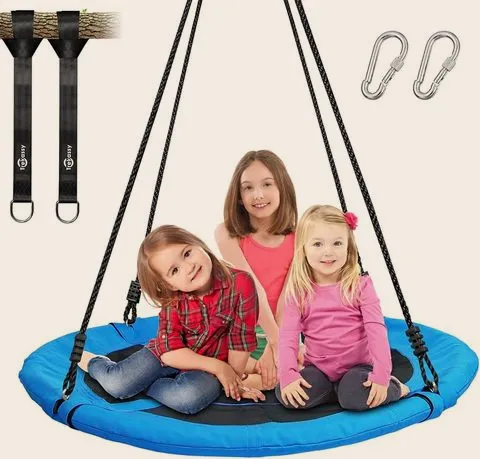
- Rocking and swinging. Slow, rhythmic movement gives the balance system organizing input.
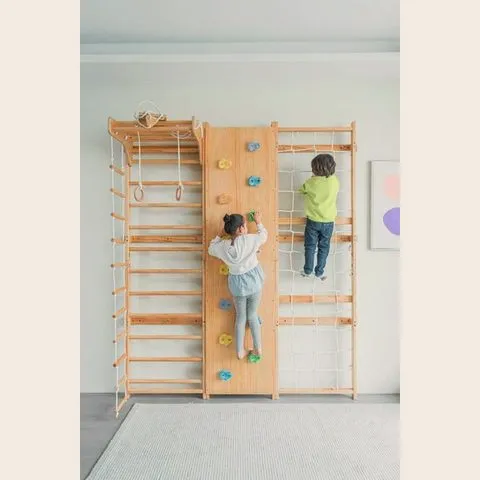
- Climbing. Climbing triangles, wall gyms and playground ladders build strength and body awareness.
- Balance play. Stepping stones, balance beams and tape lines on the floor.
- Crossing the middle. Big figure-eights with a ribbon or scarf, or tossing a ball from one side of the body to the other.




For families ready to set up a movement corner at home, these are the pieces I recommend most:


A few important notes
- Don't force it. If an activity is really hard or upsetting for your child, that's useful information for your therapist. It isn't something to push through.
- Specific reflex exercises belong in a therapist's plan. When a reflex program is part of your child's therapy, your OT will choose the activities, the order and how often to do them.
- Consistency beats intensity. Ten minutes of movement play most days does more than an occasional big session.
When to ask for an evaluation
Consider an OT evaluation if your child:
- Has a hard time sitting still, even when they're trying
- Tires quickly during handwriting, or grips the pencil very tightly
- Seems clumsy, avoids climbing, or struggles to learn to ride a bike
- Has big reactions to sudden noises, movement or touch
- Struggles with regulation that's getting in the way of school, sleep or friendships
A comprehensive evaluation looks at reflexes, sensory processing and motor skills together, so you get a clear picture of what's going on underneath and a plan to address it. If you're in the Dallas area, that's exactly what we do at NeuroNest.
Every child is different. This post is general education, not medical advice. If you have concerns about your child's development, talk with your pediatrician or an occupational therapist. In the Dallas area? Learn about evaluations at NeuroNest.