Move & Climb · 5 min read
Why Every Kid Needs to Swing: Vestibular Input, Explained
How swinging and movement shape brain development and nervous system regulation, why an indoor swing is my number-one recommendation, and how to use one safely.
Pterying
 Why Erin picked it
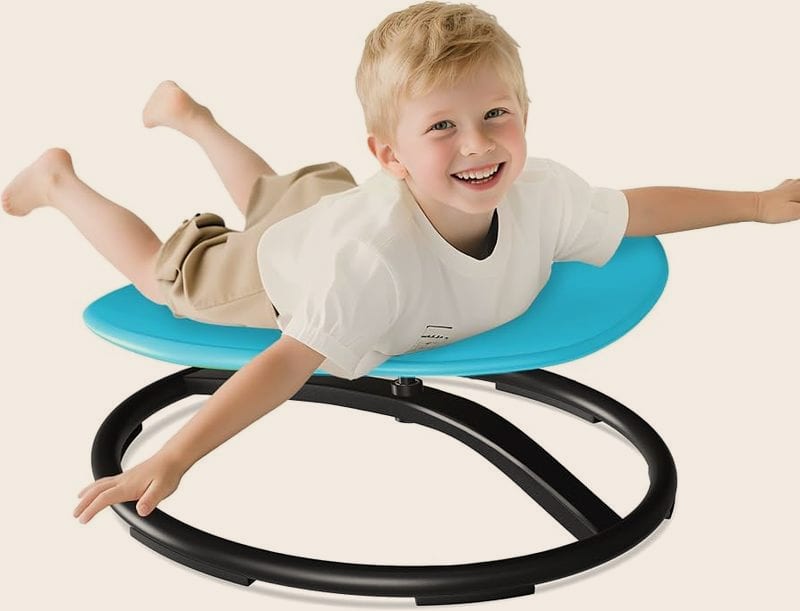
Great on the belly for TLR work with vestibular input, since prone extension, the TLR and the vestibular system are so closely linked. Kids can also sit for rotary input and put their feet down to control it.
Kids working on reflex integration and vestibular processing, including those who need to control how much movement they get.
You can't supervise spinning sessions, or your child has a seizure disorder or vestibular condition. Check with their doctor or OT first.
Affiliate link: I may earn a small commission at no cost to you. Prices and availability are set by Amazon. Always supervise play and follow the manufacturer's safety guidance.
Hands-on review
We use this spinner constantly in the clinic. Lying on their belly is one of my favorite ways to work on the TLR (tonic labyrinthine reflex) together with vestibular input, because prone extension, the TLR and the vestibular system are so closely linked. Spinning on the belly naturally activates prone extension as kids lift their head, arms and legs.
Kids can also sit on it for rotary vestibular input. For a child who is hyperresponsive to movement, that's a big advantage: they can put their feet down and control the input themselves, so it never becomes too much.
It's a great obstacle course station too. Always supervise spinning, keep it child-led, and stop at any sign of dizziness or discomfort.
Erin Wiggins, OT · How I choose products
Read more
Move & Climb · 5 min read
How swinging and movement shape brain development and nervous system regulation, why an indoor swing is my number-one recommendation, and how to use one safely.
More Move & Climb