Move & Climb · 5 min read
Why Every Kid Needs to Swing: Vestibular Input, Explained
How swinging and movement shape brain development and nervous system regulation, why an indoor swing is my number-one recommendation, and how to use one safely.
 Why Erin picked it
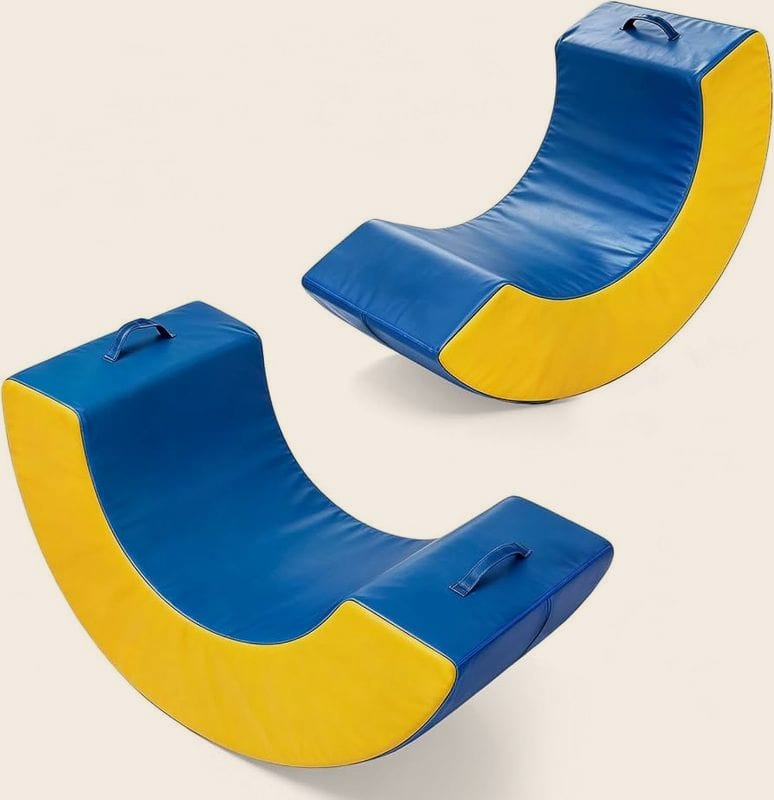
So much more than a rocker. Flip it over and kids can lie on their belly for prone extension and TLR work, or over their back for Moro and vestibular processing. It's also a great obstacle course piece.
Families doing reflex integration work at home, and anyone building an obstacle course or sensory corner.
Your child is fearful of movement right now. Start with them seated and rocking slowly, with your hands on.
Affiliate link: I may earn a small commission at no cost to you. Prices and availability are set by Amazon. Always supervise play and follow the manufacturer's safety guidance.
Hands-on review
This C-shaped foam rocker is one of the most versatile pieces in our clinic. Sitting in it gives calm, rhythmic rocking, but the real magic happens when you flip it over.
On their belly over the curve, a child works on prone extension and the TLR (tonic labyrinthine reflex), lifting their head and chest against gravity while the rock adds vestibular input. Over their back, it becomes a tool for the Moro reflex and vestibular processing, with the child supported and the movement slow and predictable.
I also love it in an obstacle course: climb over it, rock on it, crawl under the arch. Every pass adds movement, balance and body awareness.
Erin Wiggins, OT · How I choose products
Read more
Move & Climb · 5 min read
How swinging and movement shape brain development and nervous system regulation, why an indoor swing is my number-one recommendation, and how to use one safely.
More Sensory Regulation