

This post contains affiliate links. If you buy through them, I may earn a small commission at no extra cost to you.
If you've followed along on Instagram for a while, you've heard me say "give them some heavy work" more times than I can count. It's one of the most useful tools I share with families, and it doesn't take special equipment or a lot of time.
What is heavy work?
Heavy work means any activity that pushes, pulls, carries, lifts or presses against resistance. Those activities send strong input to the muscles and joints through a sense called proprioception, which is your body's awareness of where it is and how hard it's working.
For many kids, proprioceptive input is organizing. It can help an under-responsive child wake up and engage, and it can help an over-excited child settle. That's why OTs lean on it so often: it tends to meet kids where they are.
Signs your child might be looking for it
Kids who seek proprioceptive input often:
- Crash into couches, walls, or people on purpose
- Stomp instead of walk, or jump constantly
- Chew on shirts, pencils or toys
- Give "too hard" hugs or play a little rough
- Have a hard time settling after school or before bed
These behaviors aren't bad; they're signals. Their bodies are asking for input, and heavy work gives it to them in a way that works for everyone.
Heavy work you can do today, no equipment needed
- Wall push-ups: 10 slow pushes against the wall before homework
- Carry the groceries: give them a bag with some real weight
- Animal walks: bear crawls, crab walks, and frog jumps down the hallway
- Push the laundry basket across the floor with a few books inside
- Tug-of-war with a towel
Tools that make it easier
When families ask what's worth buying, these are the pieces I reach for most. A compression tunnel is my number-one pick. Crawling through it gives deep pressure and weight-bearing through the arms, and kids think it's pure fun.




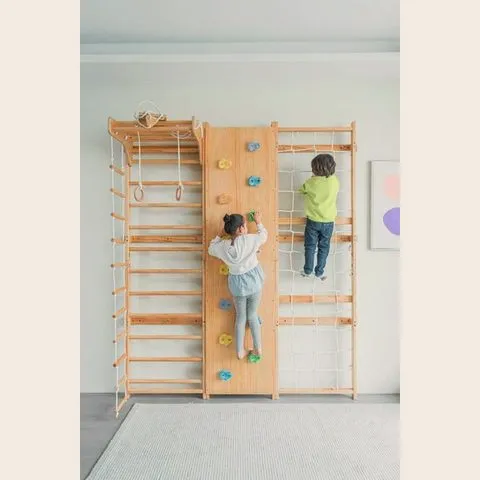
For bigger movers who need a lot of input, climbing is hard to beat:


Timing matters
Heavy work tends to work best before the hard part of the day, not in the middle of a meltdown. Try a five-minute heavy work break:
- Right after school, before homework
- Before sitting down for dinner
- As part of the bedtime routine (slow, rhythmic pushing and pulling, not wild jumping)
Watch how your child responds. Every nervous system is different, and the goal is to find what helps your child feel calm and ready.
When to ask for help
If your child seems to need input constantly, or if regulation is getting in the way of school, sleep or friendships, that's worth a conversation with an occupational therapist. We can look at why their body is seeking so much input and build a plan that addresses it.
Every child is different. This post is general education, not medical advice. If you have concerns about your child's development, talk with your pediatrician or an occupational therapist. In the Dallas area? Learn about evaluations at NeuroNest.