
This post contains affiliate links. If you buy through them, I may earn a small commission at no extra cost to you.
"Should my three-year-old be writing letters yet?" It's one of the questions I hear most. My answer is almost always the same: there's a lot of work that comes before the pencil.
I see the other side of this question every week. Many of the kids who come to NeuroNest have had years of handwriting practice, and their writing still isn't easy. When we look underneath, the pencil was rarely the problem. That's why I say I don't treat handwriting. I treat what handwriting is made of.
How young brains learn letters
Young children learn through their bodies, which is why heavy work and movement matter so much. Long before a letter means anything on paper, a child is building the systems that writing depends on: how their muscles feel when they move, how their eyes guide their hands, and how their two hands work together.
Letters stick best when kids learn them through more than one sense at a time. When a child sees a letter, traces it with a finger, builds it from pieces, says its sound and moves their arm through its shape, the brain links all of that information together. That's what we mean by multisensory learning.
What handwriting is actually made of
Writing looks like a hand skill, but the hand is the last link in a long chain. From the bottom up, a child needs:
- A nervous system that feels safe enough to sit still. A body stuck on alert braces, fidgets and tires fast. No amount of practice works around that.
- Integrated primitive reflexes. Several early reflexes involve the head, arms and hands, so when they stay active, they pull directly on writing (more below).
- Balance and postural control. The vestibular system and the core hold the body upright so the arm doesn't have to.
- Eyes that aim, team and track. Copying from the board means shifting focus far to near, finding your place, and keeping the eyes steady while the head moves.
- Then hands. Strength, finger isolation and two hands working together.
Most handwriting help starts at step 5. I start at step 1.
The reflexes I look at for writing
- ATNR (the "fencer" reflex). When the head turns, the arm on that side wants to straighten. Writing asks a child to look toward the writing hand all day. When this reflex is still active, I often see a stiff elbow, a grip that shifts, writing that drifts across the page, or a child who switches hands at midline.
- STNR. This reflex links head position to the arms and legs. Looking down at the paper can pull the arms to bend and the body to sink. Think slumping onto the desk, W-sitting, or legs wrapped around the chair.
- Palmar and Babkin (the grasp and hand to mouth reflexes). These link pressure in the palm to grasping and to the mouth. Watch for a very tight grip, trouble separating the fingers, or the tongue and mouth moving while your child writes.
- Moro. Not a hand reflex, but it sets the tone for everything. A retained Moro often keeps the nervous system on high alert, and a body on alert braces its muscles and fatigues quickly.
To be straightforward: research on retained reflexes is still growing. A reflex on its own doesn't explain a child's handwriting, which is why we assess reflexes alongside posture, vision, sensory processing and motor skills. But in my clinical experience, these are the patterns that most often sit underneath writing that "should" be easier by now.

Inside the brain: from the bottom up
Writing starts lower in the brain than most people think. The brainstem sets arousal, the dial between calm and alert. The vestibular nuclei and cerebellum keep the body upright and the eyes steady, so the hand has a stable base to work from. Primitive reflexes live down here too, generated in the brainstem and spinal cord.
On top of that foundation, motor control develops from the center out: trunk and shoulders first, then the arm, and finally the small muscles of the fingers, whose brain pathways keep maturing through the early school years. Asking for tiny pencil movements before that system is ready asks the newest part of the motor system to carry the whole load.
Once the foundation is there, something remarkable happens. As children learn letters, a patch of visual cortex called the visual word form area (part of the fusiform gyrus) gradually specializes in recognizing them. In one well-known study, preschoolers who practiced letters by handwriting them, rather than typing or tracing, showed a more mature, reading-like brain response afterward. Making a letter yourself forces the brain to understand its shape. The hands really do teach the eyes to read, but only when the body underneath them is ready to do the job.
The building blocks that come first
Before a pencil feels easy, kids need:
- A stable core and shoulders. Fingers can only be precise when the body behind them is steady. Crawling, climbing, wheelbarrow walking and playing on the tummy all build that stability.
- Hand strength. Writing, cutting and buttons all use the small muscles in the hand. Squeezing, pinching and pulling build them.
- Finger isolation and a pincer grasp. Using the thumb and pointer finger together, without the whole hand joining in, is the start of a mature pencil grip.
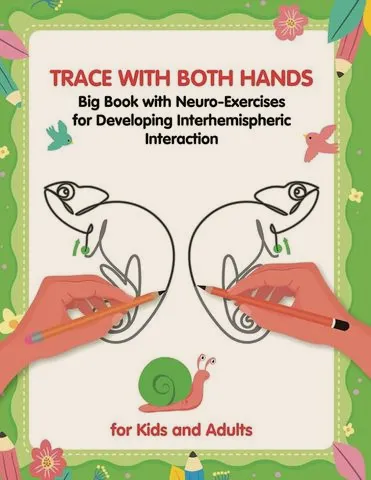
- Two hands working together. One hand writes while the other holds the paper steady. Lacing, building and tearing all practice that teamwork.
- Eye-hand coordination. The eyes have to guide the hand along a line or a shape. Copying simple shapes is the bridge to copying letters.
A helpful milestone: most children copy lines, circles and a cross before they're ready to form letters. Copying a diagonal line or a triangle usually comes later, often around age five, and many letters need those diagonals.

Building strong hands
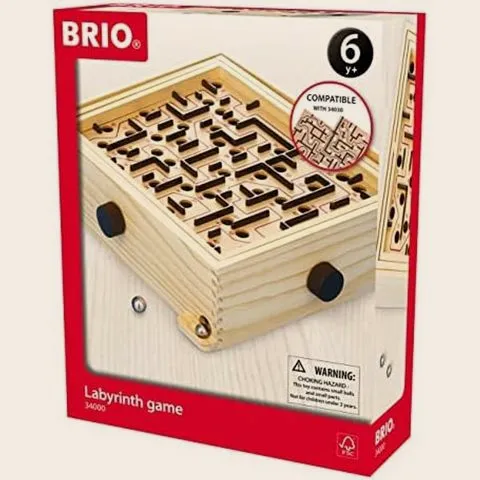
These are the fine motor tools I reach for to build hand strength and control. They're all play to a child, but they're doing serious work.

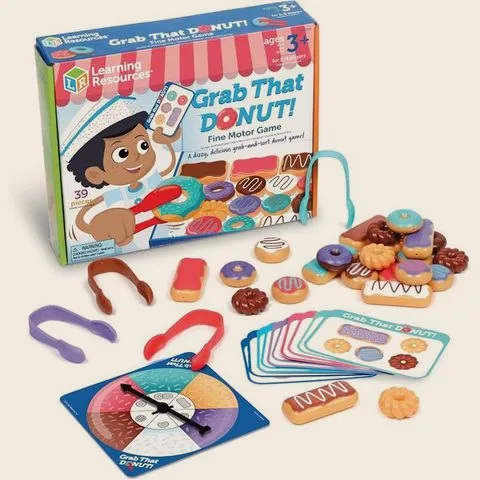
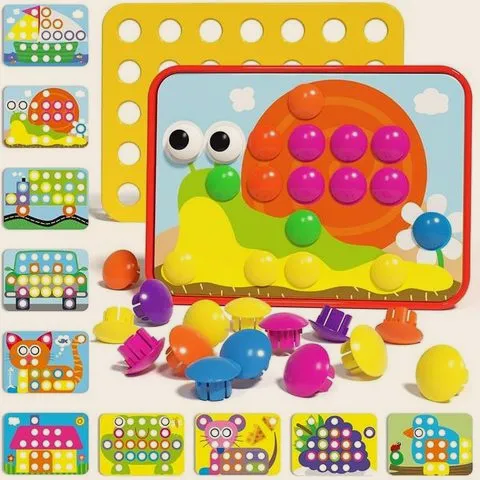
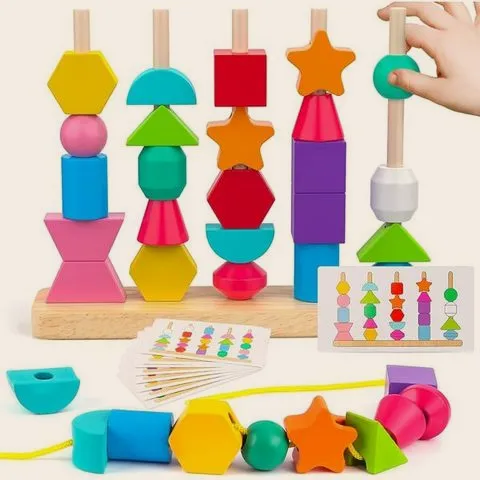
- Therapy putty is my clinic favorite. Hide small beads in it to dig out, then pinch, roll and squeeze.
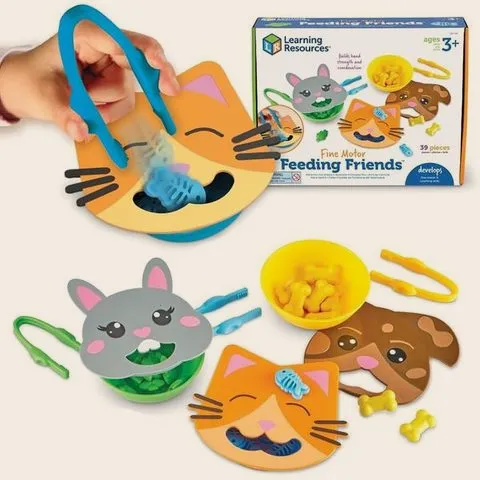
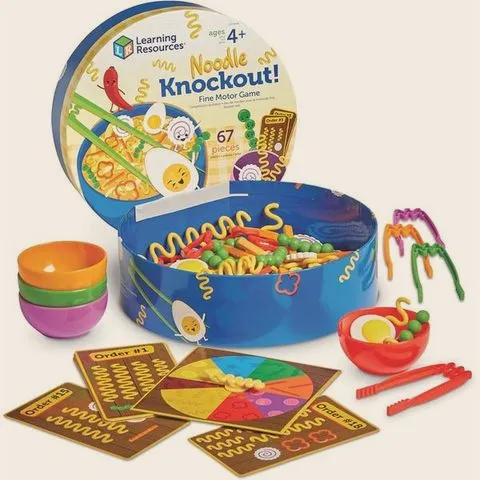
- Tweezers and tongs, like the feeding and donut games, build the exact finger strength a pencil grip needs.
- Pegboards and lacing practice the pincer grasp and both hands working together.
Multisensory letter learning
When a child is ready to start learning letter shapes, I like to go big before small, and hands before pencils:
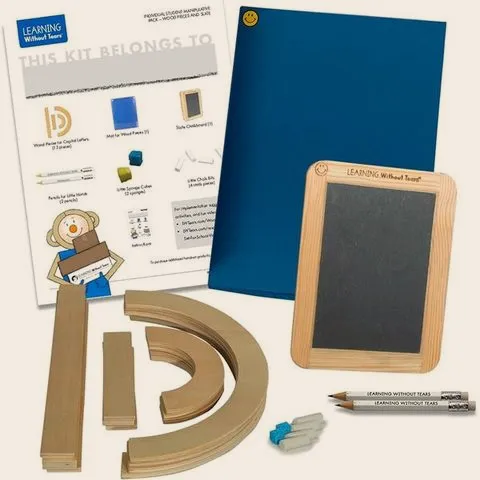
- Build the letter. Wooden pieces, like the Learning Without Tears kit, teach letters as a few simple parts (big lines, little lines, big curves and little curves) instead of a jumble of squiggles.
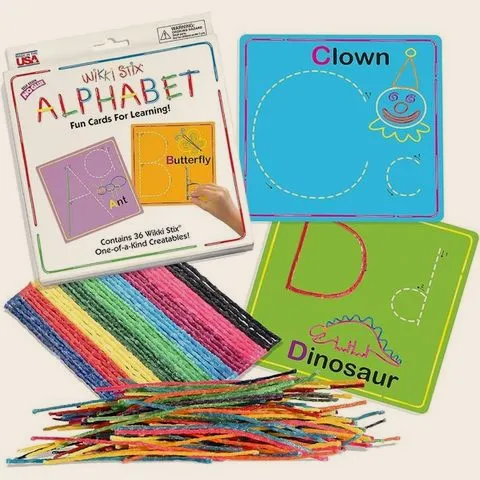
- Feel the letter. Bending Wikki Stix over a letter card lets kids feel the shape with their fingertips.
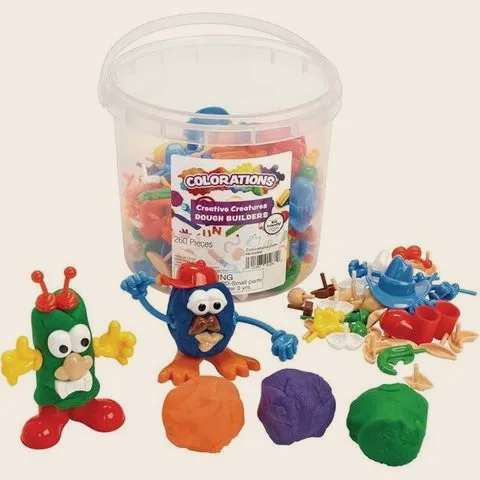
- Press the letter. Stamping letters into playdough adds hand strength to letter recognition.
- Write the letter big. Trace letters with a finger in shaving cream or sand, then on a vertical surface like a chalkboard or the bathtub wall. Writing on a vertical surface naturally puts the wrist in a good position and works the shoulder.
- Then go small. Once the shape is in their body, paper and pencil feel far less overwhelming.


When the pencil comes
When it's time for a pencil, a few small changes make a big difference:
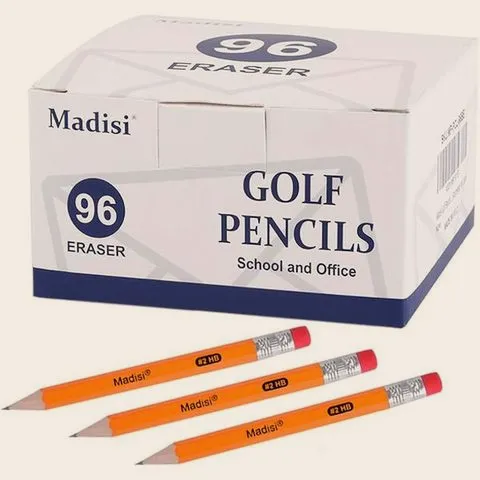
- Use short pencils or broken crayons. A short pencil leaves no room for a fisted grip, so the fingers naturally move into a tripod grasp. Golf pencils are perfect for this.
- Try a vertical surface or a slanted board to keep the wrist in a good position.
- Keep it short and successful. A few letters done well beat a full worksheet that ends in tears.
When to talk to an OT
It's worth a conversation with an occupational therapist if your child:
- Avoids drawing, coloring or crafts, or gets frustrated quickly
- Holds crayons or pencils with a tight fist, or switches hands a lot past age four or five
- Tires quickly when writing, or presses very hard or very lightly
- Has trouble copying shapes or forming letters compared to kids their age
- Slumps onto the desk, wraps legs around the chair, or sticks the tongue out while writing
- Loses their place copying from the board, or complains that writing makes their eyes or head hurt
Often the root isn't the letters at all. It's the reflexes, posture, eyes or nervous system underneath, and that's where we start. A comprehensive evaluation looks at all of it together. In the Dallas area, we'd love to see you at NeuroNest. Families also travel to us from across the country for a NeuroNest intensive.
Sources and further reading
- James, K. H., & Engelhardt, L. (2012). The effects of handwriting experience on functional brain development in pre-literate children. Trends in Neuroscience and Education, 1(1), 32 to 42.
- Dehaene, S. (2009). Reading in the Brain: The New Science of How We Read. Viking.
- McPhillips, M., Hepper, P. G., & Mulhern, G. (2000). Effects of replicating primary-reflex movements on specific reading difficulties in children: a randomised, double-blind, controlled trial. The Lancet, 355(9203), 537 to 541.
- Gieysztor, E. Z., Choińska, A. M., & Paprocka-Borowicz, M. (2018). Persistence of primitive reflexes and associated motor problems in healthy preschool children. Archives of Medical Science, 14(1), 167 to 173.
Every child is different. This post is general education, not medical advice. If you have concerns about your child's development, talk with your pediatrician or an occupational therapist. In the Dallas area? Learn about evaluations at NeuroNest. Not in Dallas? Families travel to NeuroNest from across the country for a NeuroNest intensive: five or ten days of individualized, one-on-one treatment. Learn about intensives.